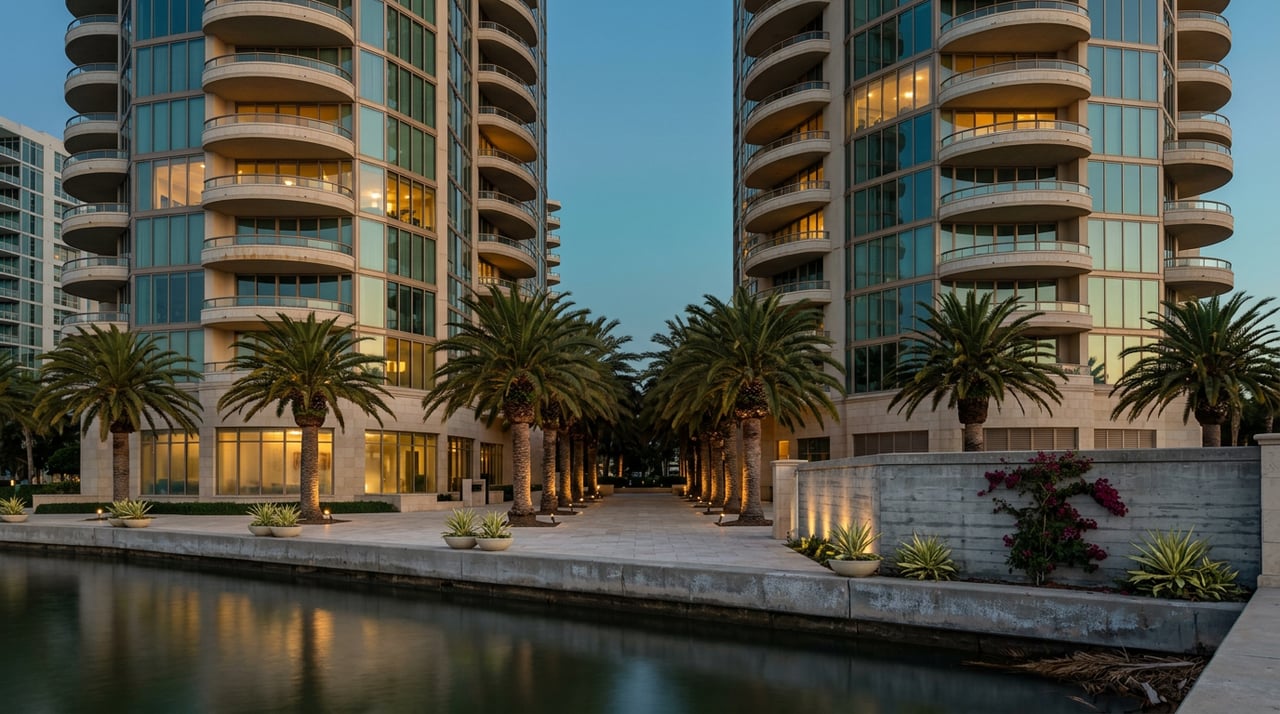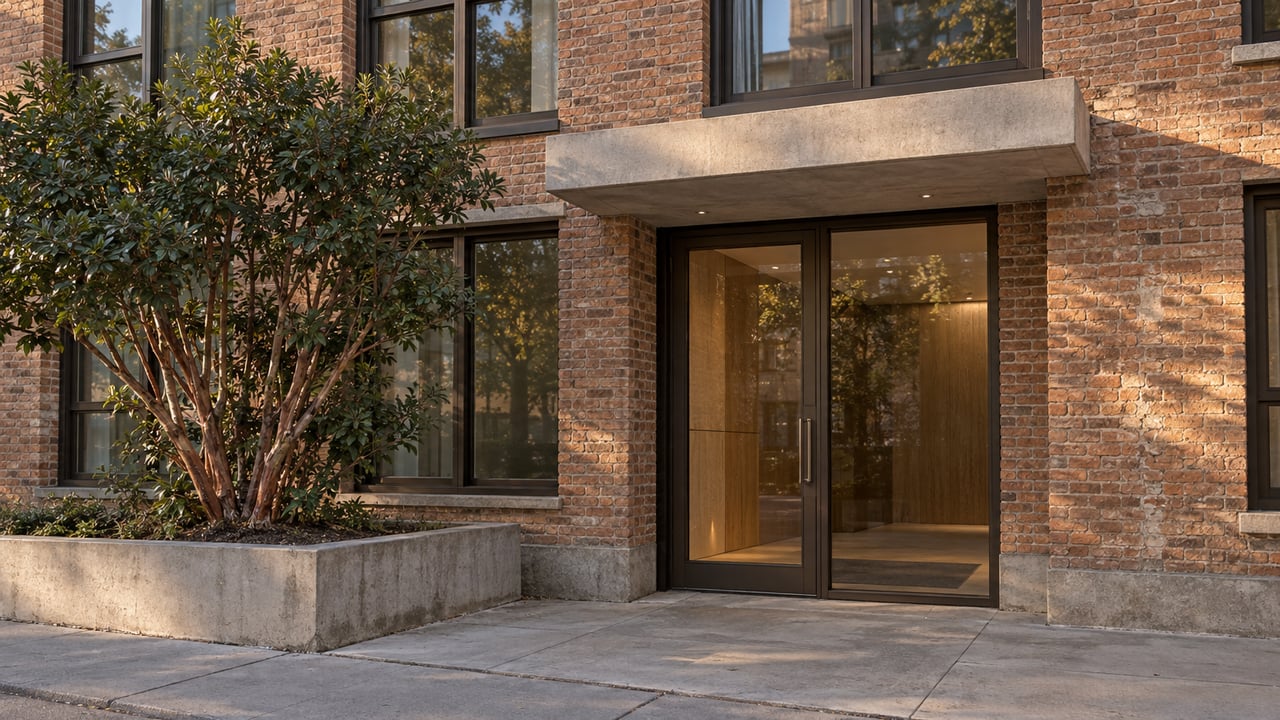
For years, someone coming home to a high floor on Pacific Highway, the kind of address with a wraparound bay view and a doorman downstairs, still had to get in a car to buy milk. The closest full-line grocery downtown was a Ralph's over in the Gaslamp Quarter or a Smart & Final and Albertsons clear across in East Village. Columbia District's towers went up along what postcards call Millionaire Row, and the neighborhood still ran its errands like a place without a grocery store, because it was one.
On September 23, that changed. Whole Foods Market opened its first downtown San Diego location, a 50,000-square-foot store spanning the ground floor and mezzanine of a 34-story residential tower called The Torrey, developed by Holland Partner Group at the corner of Front and A streets. The company's own announcement promised a coffee and juice bar and more than 1,500 products from over 450 California suppliers. It had been a decade coming. An earlier deal to put a Whole Foods into a 7th and Market office development fell apart years ago, and downtown went without until this fall.
One Block From the Line
Front and A sits close enough to Columbia District's towers to matter, but which neighborhood actually claims it depends on whose map you're reading. Wikipedia's entry on Columbia draws its northern edge at Ash Street, its eastern edge at Union Street, and the Pacific Ocean to the west. Other local boundary maps push the eastern line out to State Street and treat Broadway, not F Street, as the southern border. A Street runs one block south of Ash, which is the line most of those maps use to mark where Columbia District ends and Cortez Hill or Core-Columbia begins.
That means the new Whole Foods lands right at the seam. It is close enough to walk from the Pacific Highway towers, and just far enough inland that a strict reading of the boundary might place it a block into the neighbor's territory. For a resident on the 20th floor of Bayside or Pacific Gate, the distinction is academic. The store is in range on foot either way, and Columbia District's own edges have never been drawn with much confidence to begin with.
What the Wait Looked Like
Times of San Diego spent time with downtown residents and workers in the run-up to the opening, and the picture they described was consistent: driving to find real groceries had become routine. One Core-Columbia resident, identified as Ken Robb, told the paper you have to seek it out when asked about downtown grocery shopping. Another resident, a correctional officer who had worked nearby for 18 years, said the existing Ralph's was fine but thin on options and that she'd been driving to get her groceries for years. Lucy's Taco Shop, the closest eatery to the new store's footprint, welcomed the addition too, on the logic that more foot traffic and a little competition tend to make everyone sharper.
None of this is dramatic. It's the texture of a neighborhood built fast around views and finishes, where the residential tower count outpaced the retail that normally follows people home. The opening is a reminder that downtown's residential growth and retail amenities did not always arrive together.
The Hotel That Bet on Broadway
A few blocks south, on West Broadway, a different kind of opening tells a similar story. The Guild Hotel occupies a 1924 building that started life as an Armed Services YMCA, designed by Lincoln Rogers and Frank W. Stevenson and added to the National Register of Historic Places in 2007. Oram Hotels, founded by Kevin Mansour, bought the property out of bankruptcy in 2014 for $14 million. This year, after a renovation that touched the whole building, the hotel opened Zuma, the global Japanese restaurant brand's first California location, beating out both Los Angeles and San Francisco for the honor.
Zuma occupies a main dining room, sushi counter, and robata grill, with a separate entrance off Columbia Street that runs through a teak-beam tunnel and lets diners skip the hotel lobby entirely. The Guild itself now runs 149 rooms across eight levels, with a backyard pool under construction for next summer and a curated art collection filling the public spaces. Mansour told Times of San Diego the latest renovation was meant to help revive the whole West Broadway corridor, which he described as home to premier office buildings, the RaDD life-science campus, and a new Whole Foods a few blocks away. He was talking about the same grocery store two sections up. The corridor's own developers already see these projects as one story.
The Life-Science Neighbor Nobody Expected to Open a Grocery Store or a Gym
The RaDD project, short for Research and Development District, is IQHQ's $1.9 billion bet on the waterfront: 1.7 million square feet across six city blocks and five lab and office buildings, with retail built into the ground floors. It's a biotech campus, not a residential development, but its retail leasing has quietly filled in some of the same gaps the neighborhood's condo towers never addressed. As of last fall, half of RaDD's 200,000 square feet of retail space had already been leased, with Rivian and The Shade Store operating storefronts and an Equinox location slated to follow by year's end.
IQHQ also built Progress Park, a 1.5-acre public space at Broadway and North Harbor Drive, on ground that used to hold a Navy office and warehouse. IQHQ describes the goal as a publicly accessible innovation corridor linking Seaport Village to Waterfront Park, with the park's lawns, amphitheater-style seating, and pavilion set aside for community programs and cultural events. Between RaDD's retail and Progress Park's lawn, a project built to attract lab tenants has become one more reason to be on foot in this stretch of downtown.
The Rhythm That Was Already There
None of this is happening in an empty district. Ruocco Park, the 3.3-acre stretch of green at Harbor Lane and Pacific Highway, has been part of Columbia's daily pattern for years, well before any of these openings broke ground. Its entrance plaza holds The Riparium, a 45-foot sculptural gateway of eucalyptus branches by local artist Roman de Salvo, and Saturday mornings bring the Urbn Run Club through around 7:30 or 8 a.m., dogs on leashes, joggers circling the bay view. The park has also hosted Gran Fondo San Diego, a two-day cycling festival that starts and finishes on its lawn. That rhythm didn't need a Whole Foods or a Michelin-adjacent restaurant to exist. It's worth remembering as the newer openings get the attention, because the neighborhood's actual daily life was already built around walking to the water, long before anyone had somewhere new to eat or shop when they got there.
Put the three stories next to each other and a pattern shows up. The Torrey brought Whole Foods Market to downtown, The Guild added Zuma, and RaDD adds retail space alongside Progress Park, which IQHQ built. Together, these projects add grocery, dining, retail, and park options near Columbia District.
That's worth knowing if you live on Pacific Highway and have been driving to Gaslamp for groceries out of habit. The habit is no longer necessary, and the fix came from one block over.
If you're weighing what a specific floor plan or a specific tower on Pacific Highway is actually worth once you factor in a walkable grocery store and a restaurant scene that didn't exist last year, that's the kind of block-by-block detail Denny Oh & Associates tracks for a living. Contact Us.